
Material and component structure
List timber, board, hardware, fabric, finishing and other components against the product. Agree units and quantity rules before building the calculation.
Build a clear Bill of Materials, keep rate inputs consistent and make cost changes easier to review. HSC helps furniture businesses turn repeated calculations into a practical costing workflow.
Discuss your requirementsA useful cost sheet explains its result. We organise component quantities, dimensions, material rates and agreed cost allowances so your team can review how a figure was calculated. Product specifications and costing logic are structured together.
List timber, board, hardware, fabric, finishing and other components against the product. Agree units and quantity rules before building the calculation.
Maintain approved supplier or material rates in an agreed structure. Review affected products when a rate changes, rather than manually searching disconnected files.
Define how labour, job work, packaging and overhead allowances enter the calculation. Make assumptions visible so the team can check them.
Review freight, platform charges and profit assumptions alongside the product cost. The CMA demo lets you explore commercial inputs; actual charges must be checked for the relevant platform and shipment.
This illustrative product cost uses fictional figures: timber ₹900, hardware ₹150, finishing ₹250, labour ₹400, packing ₹200 and allocated overhead ₹100. Total: ₹2,000. A 10% rise in the timber rate adds ₹90, bringing the product cost to ₹2,090. Selling-price calculations would separately consider tax, freight, platform fees and the chosen profit basis.
Explore the interactive demo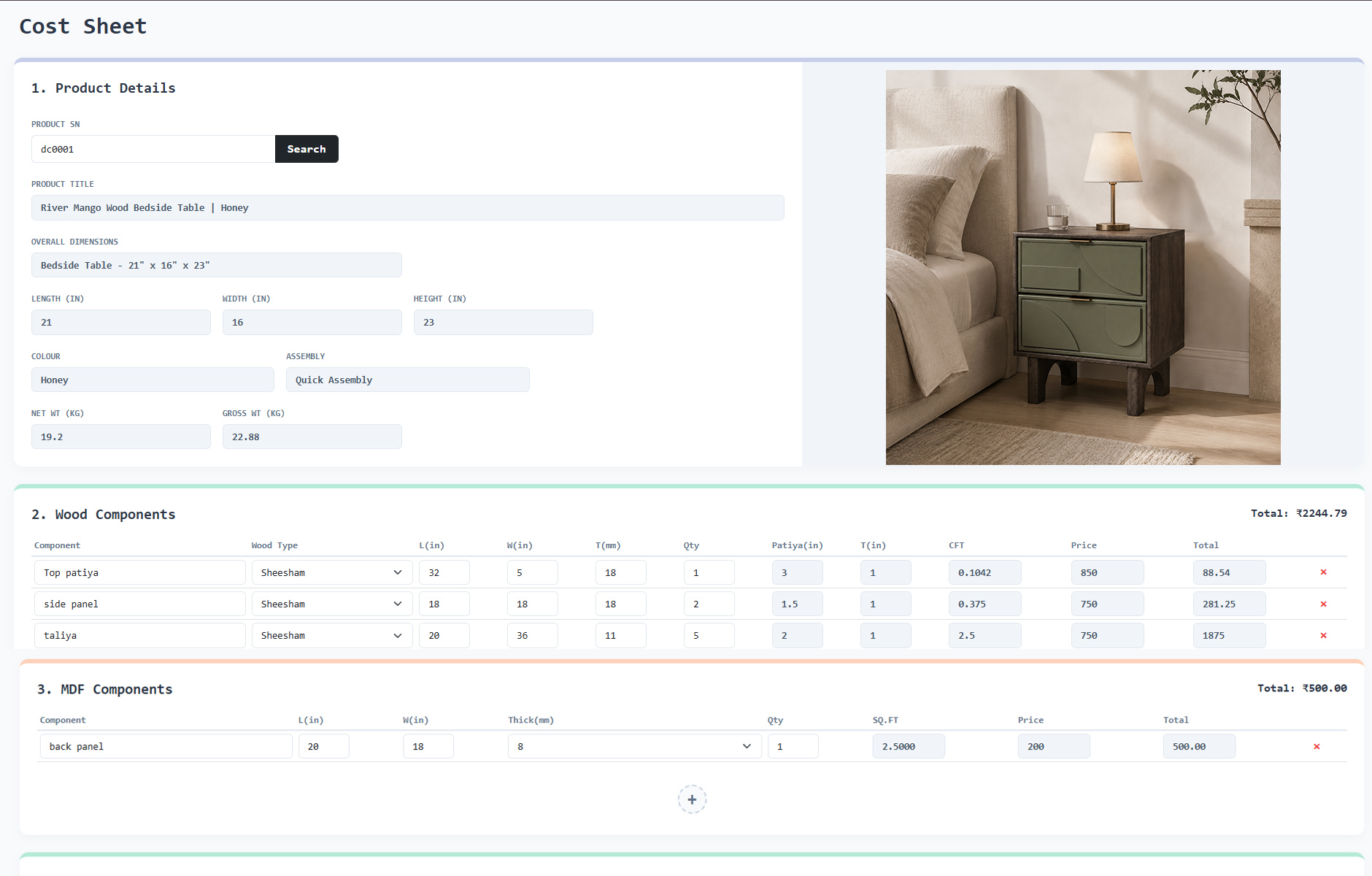
Start with its specification and existing cost sheet.
Define units, quantities, rates and allowances.
Compare the result against an approved manual example.
Train the team and review the quotation workflow.
No. Costing needs your own approved rates and assumptions. Public demo records and rates are examples, not buying prices or a commercial quotation.
We can review the format and preserve the fields your team needs, while improving the structure and checking duplicated calculations.
They use different bases. A 20% markup on a ₹2,000 cost gives ₹2,400 before other charges; a 20% margin on the selling price gives ₹2,500. The agreed pricing logic must make that distinction clear.
Share the task, product or project you have in mind. We’ll review it with you and agree the next step.